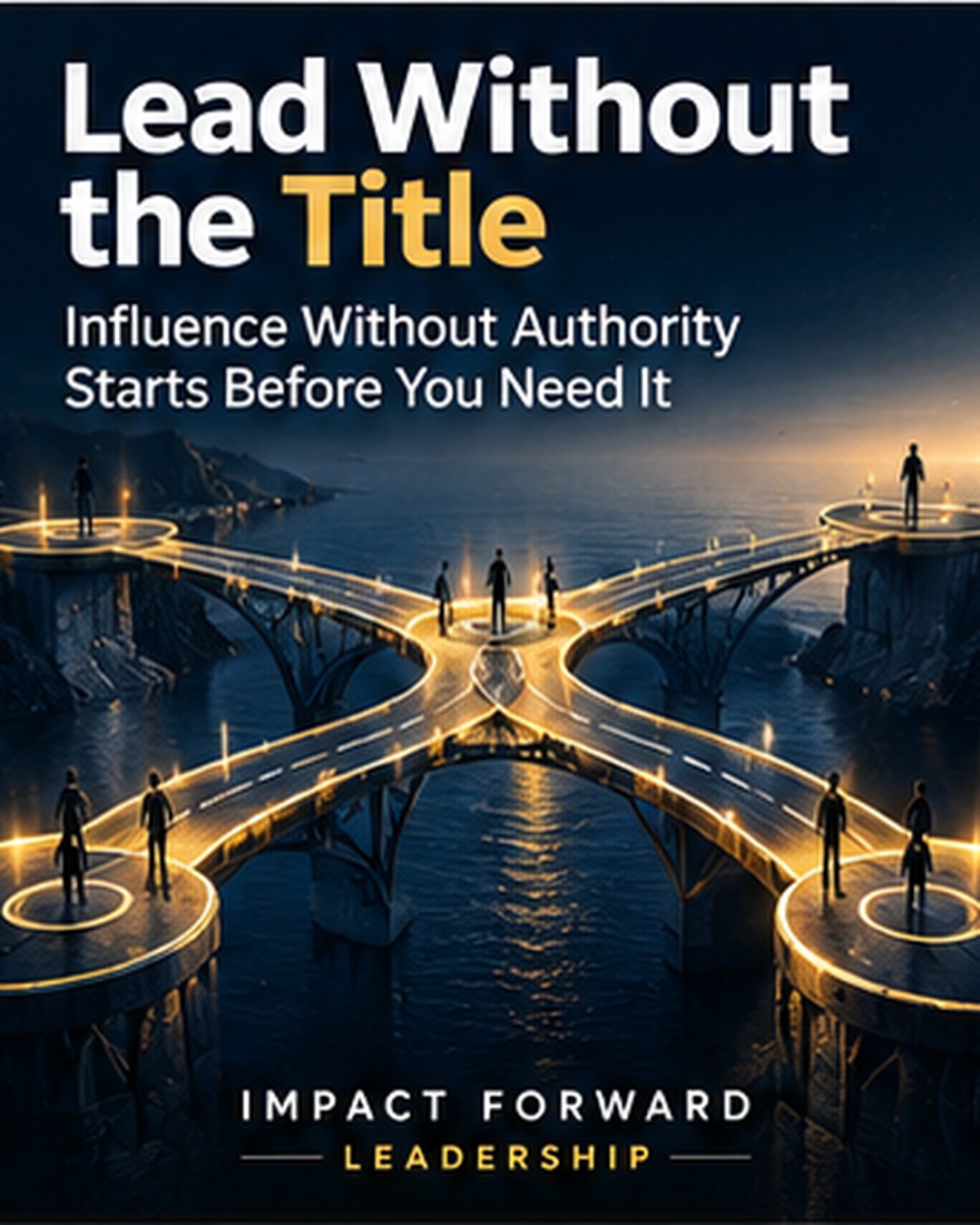
Influence without authority sounds like something you use when a difficult situation shows up.
It is not.
The best influence is built long before the escalation, the executive review, or the moment when you need another team to change direction.
If the first meaningful conversation you have with someone happens when you need something from them, you are already behind.
Authority is a weak strategy in cross-functional work
Technical leaders often carry responsibility that extends far beyond their org chart. Product owns one piece. Engineering owns another. Architecture, Operations, Security, Finance, Legal, and business partners may all own part of the path.
You can be accountable for the outcome without having direct authority over any of those people.
That means your real leadership currency is trust.
Three things build influence capital
I think about influence capital through three simple ideas:
- Competence: Do you understand enough of the business and technical context to make the conversation better?
- Consistency: Do people know what they are going to get from you when pressure rises?
- Contribution: Does your involvement make the work clearer, faster, or easier to navigate?
People are more willing to move with you when they believe you understand the work, show up predictably, and add value instead of adding another layer of coordination.
Map the real stakeholder system
An org chart tells you who reports to whom. It does not tell you how the decision actually moves.
For any important cross-functional outcome, identify:
- The person who makes the final decision
- The people who strongly shape that decision
- The people who must implement it
- The people carrying meaningful risk if it fails
- The connectors who can bridge groups that do not naturally align
That map is often more useful than the formal reporting structure.
Pre-alignment is not politics
A lot of leaders wait until the big meeting to discover objections.
That is usually too late.
Talk with key stakeholders before the decision forum. Test the frame. Surface concerns. Understand what each person is protecting. Find the tradeoff that matters most to them.
This is not manipulation. It is preparation.
The goal is to use the meeting for the decision, not for everyone to discover the issue for the first time.
Stop asking for permission when you should be shaping alignment
There is a big difference between these two questions:
“Is everyone okay if we do this?”
and:
“My recommendation is Option B because it protects the launch date while keeping the risk reversible. Here is the tradeoff we are accepting. I need the final decision by Thursday.”
The second posture still invites input. It just does not surrender leadership.
Try this this week
Pick one outcome that depends on at least three teams.
- Name the decider.
- List the two or three strongest influencers.
- Write down what each person is most likely protecting.
- Rate your current trust with each person: strong, developing, or weak.
- Schedule one conversation that reduces friction before the next formal meeting.
- Rewrite your next ask as a recommendation instead of a request for permission.
Influence becomes much easier when the relationship is not starting from zero.
Go deeper: Influence Without Authority
The full Influence Without Authority domain inside the Beyond Delivery Leadership Platform includes stakeholder mapping, trust inventories, pre-alignment planning, and practical ways to lead laterally and upward.
The complete Beyond Delivery Leadership Platform is available for a one-time $25 payment, including all six domains and 31 practical lessons. Try a free lesson or find your starting domain before enrolling.
Leave a Reply